
I used to grab a couple of eggs every morning without thinking twice about what was actually in them. Then a friend who’s a personal trainer asked me a simple question: “Do you know how many calories are in the egg you just ate, or are you just guessing?” I was guessing. Most people are.
That conversation sent me down a rabbit hole of nutrition labels, cooking method comparisons, and a fair amount of confusion, because different sources kept giving me slightly different numbers. So this guide pulls it all together in one place: the egg nutrition facts you actually need, why the numbers sometimes don’t match, and how to use this information for your own goals, whether that’s building muscle, managing cholesterol, or just eating a smarter breakfast.
Egg Nutrition Facts at a Glance
A large egg (about 50 grams) contains roughly 70 to 78 calories, 6 grams of protein, 5 grams of fat, and under 1 gram of carbohydrates. It also delivers around 186 milligrams of cholesterol, all of it concentrated in the yolk, along with meaningful amounts of vitamin B12, vitamin D, choline, selenium, and the antioxidants lutein and zeaxanthin. Eggs are considered a complete protein because they contain all nine essential amino acids your body can’t produce on its own.
That’s the short version. Now let’s get into the details, because “one large egg” hides a lot of nuance depending on how you cook it, what size it is, and which part you’re eating.
Egg Nutrition Facts by Cooking Method
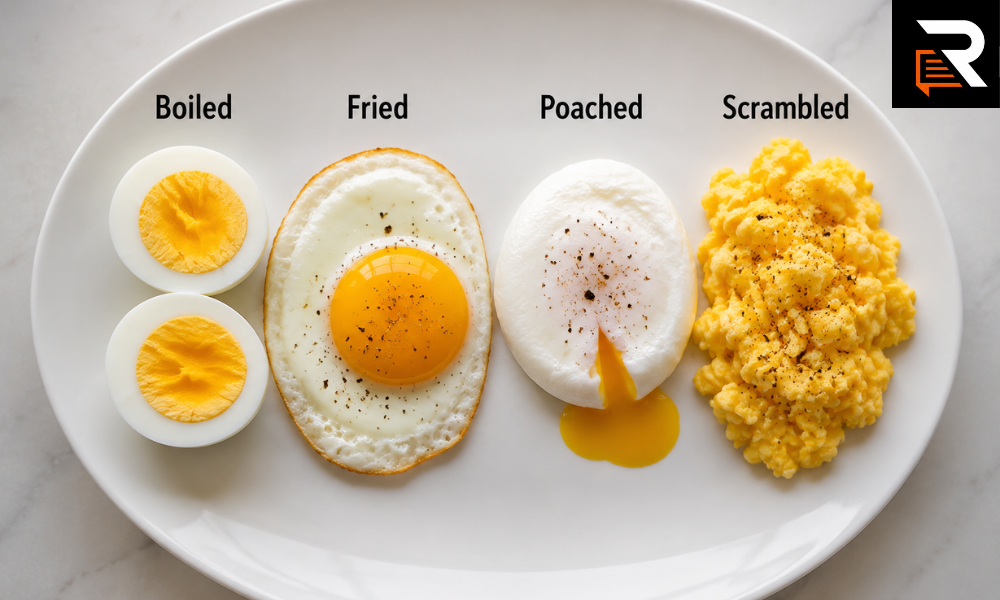
Here’s something most articles gloss over: the calorie count of “an egg” changes depending on how you prepare it. A boiled egg and a fried egg are not nutritionally identical, even though they started as the exact same egg.
| Cooking Method | Calories (approx.) | Protein | Fat | Notes |
| Raw (large egg) | 70-72 | 6.3g | 5g | Baseline nutrient values before cooking |
| Boiled/Hard-boiled | 77-78 | 6.3g | 5.3g | No added fat, easiest to track |
| Poached | 71-75 | 6.3g | 5g | Cooked in water, similar to boiled |
| Scrambled (with milk/butter) | 90-100+ | 6-7g | 7-8g | Varies widely based on added ingredients |
| Fried (in oil or butter) | 90-95 | 6.3g | 7g | Extra 15-25 calories from cooking fat |
Why the spread? Two reasons. First, egg weight varies naturally, even within the same carton, so lab averages differ slightly between sources. Second, boiling and poaching add zero extra calories, while frying and scrambling almost always introduce butter, oil, or milk, which changes the totals. If you’ve ever seen “70 calories” on one site and “90” on another, this is usually why. Neither number is wrong. They’re just describing different versions of the same egg.
Does Egg Size Actually Matter?

Yes, and it matters more than most people realize. Recipe instructions, nutrition labels, and fitness apps almost always default to “large” eggs, but if you’re grabbing extra-large or jumbo eggs from the store, your actual intake is higher than you think.
| Egg Size | Weight | Calories | Protein |
| Small | 38g | ~54 | 4.8g |
| Medium | 44g | ~63 | 5.6g |
| Large | 50g | ~72 | 6.3g |
| Extra-Large | 56g | ~80 | 7.1g |
| Jumbo | 63g | ~90 | 7.9g |
If you’re tracking macros closely, this difference adds up fast. Swap a large egg for jumbo in a three-egg omelet, and you’ve added roughly 55 extra calories and 5 extra grams of protein without changing your recipe at all. It’s a small detail, but it’s exactly the kind of thing that throws off careful meal tracking.
Egg White vs. Egg Yolk: Where the Nutrients Actually Live
This is one of the most searched egg nutrition questions, and the honest answer is more nuanced than “whites are healthy, yolks are bad.”
Egg white (from one large egg): about 17 calories, 3.6 grams of protein, virtually zero fat, and no cholesterol. It’s nearly pure protein, which is why it’s popular with people cutting calories while keeping protein intake high.
Egg yolk (from one large egg): about 55 calories, 2.7 grams of protein, roughly 4.5 grams of fat, and essentially all of the egg’s cholesterol. But the yolk is also where most of the actual nutrition lives: vitamin D, vitamin B12, choline, vitamin A, iron, and the eye-supporting antioxidants lutein and zeaxanthin all come almost entirely from the yolk.
Here’s the practical takeaway. If your only goal is maximum protein per calorie, egg whites alone win. But if you’re eating eggs for overall nutrition, throwing out the yolk means throwing out most of what makes an egg worth eating in the first place. A reasonable middle ground many people land on is using whole eggs as the base of a meal and adding an extra white or two for additional protein without a big calorie jump.
Vitamins and Minerals in Eggs
Eggs earn their “nutrient-dense” reputation honestly. A single large egg contributes meaningfully to your daily intake of:
- Vitamin B12 – supports nerve function and red blood cell production
- Vitamin D – one of the few natural food sources; supports bone health and immune function
- Choline – important for brain and liver function; eggs are among the richest natural sources
- Selenium – supports thyroid function and acts as an antioxidant
- Riboflavin (B2) – helps convert food into usable energy
- Vitamin A – supports vision and immune health
- Lutein and zeaxanthin – antioxidants concentrated in the yolk that support long-term eye health
- Folate and iron – present in smaller but still useful amounts
Eggs also contain trace amounts of nearly every other essential vitamin except vitamin C, which is part of why nutritionists often describe them as close to nature’s multivitamin, even though that phrase gets overused.
Eggs and Cholesterol: What the Current Thinking Actually Says
This is where a lot of outdated advice still floats around. For years, the standard recommendation capped dietary cholesterol at around 300 milligrams a day, which effectively limited people to one egg. Current U.S. dietary guidance has moved away from a hard daily cholesterol number and instead focuses on keeping dietary cholesterol low as part of an overall balanced diet, particularly by watching saturated and trans fat intake, which tends to have a bigger impact on blood cholesterol for most people.
That said, this isn’t a blanket green light for everyone. People with existing heart disease, diabetes, or conditions like familial hypercholesterolemia may still be advised to moderate their egg intake, because individual cholesterol response varies. If you fall into one of those categories, or you’re simply unsure, it’s worth a conversation with a doctor rather than relying on a generic online guideline, including this one.
For most healthy adults, though, eating one egg a day, or even a bit more, has not been shown to meaningfully increase heart disease risk in the way it was once assumed to.
How Many Eggs Should You Actually Eat?
“An egg a day” is the most common answer, but it’s a generic one. Here’s a more useful breakdown by situation:
- General healthy adults: Up to one to two eggs daily fits comfortably within most balanced diets.
- Athletes or those building muscle: Higher intake (2-4 eggs) can support protein goals, especially combined with other lean protein sources throughout the day.
- People managing high cholesterol or heart disease: Moderation is reasonable; many are advised to limit yolks specifically while still enjoying egg whites freely.
- Pregnant individuals: Eggs are a valuable source of choline, which supports fetal brain development, but should always be fully cooked to avoid salmonella risk.
- Children: Eggs are a good early protein source, introduced individually at first in case of allergy, since egg is among the more common childhood food allergens.
None of this replaces individualized medical advice, but it should give you a realistic starting point instead of a one-size-fits-all number.
How Do Different Egg Types Compare?
Not all eggs on the shelf are nutritionally identical, and the differences aren’t always what people assume.
Brown vs. white eggs: Shell color comes down to the breed of hen, not nutrition. A brown egg and a white egg from hens raised the same way have essentially the same nutrient profile.
Omega-3 enriched eggs: These come from hens fed a diet higher in flaxseed or algae-based feed, which genuinely does raise the omega-3 fatty acid content of the egg compared to a standard one.
Duck eggs: Larger and richer than chicken eggs, with more protein and fat per egg, plus a notably higher vitamin A content thanks to the darker yolk.
Quail eggs: Much smaller, but nutrient-dense relative to their size, often used in small portions rather than as a primary protein source.
So if you’re choosing based on nutrition rather than preference, omega-3 enriched eggs are the one upgrade with a real, measurable difference. Brown versus white is mostly a marketing distinction.
Raw vs. Cooked Eggs: Does It Change the Nutrition?
The calorie and protein content of an egg stays roughly the same whether it’s raw or cooked, but how well your body actually absorbs that protein changes quite a bit. Cooking denatures the egg’s protein structure, which makes it significantly easier for digestive enzymes to break down. Raw egg protein is absorbed far less efficiently than cooked, which is one of the main reasons nutrition professionals generally recommend cooked eggs over raw, on top of the food safety concerns around salmonella that come with eating eggs raw or undercooked.
Read More: https://recentstories.co.uk/georgina-chapman/
FAQs
How many calories are in one egg?
A large egg has about 70 to 78 calories, depending on whether it’s raw, boiled, or cooked with added fat like butter or oil.
How much protein does an egg have?
A large egg contains roughly 6.3 grams of protein, split fairly evenly between the white (about 3.6g) and the yolk (about 2.7g).
Is the egg yolk or the egg white healthier?
Neither is strictly “healthier.” Egg whites are nearly pure protein with very few calories, while the yolk carries almost all the vitamins, minerals, and healthy fats. Most people benefit from eating the whole egg unless they have a specific medical reason to limit yolks.
Do eggs raise cholesterol?
Dietary cholesterol from eggs has a smaller effect on blood cholesterol for most people than once believed, and saturated fat tends to matter more. People with existing heart disease or high cholesterol may still want to moderate intake and should check with a doctor.
How many eggs can I safely eat per week?
Most healthy adults can eat one to two eggs a day without issue. People managing heart disease, diabetes, or high cholesterol may be advised to eat fewer, particularly limiting yolks.
Are brown eggs more nutritious than white eggs?
No. Shell color reflects the breed of hen, not the nutrient content. Brown and white eggs from similarly raised hens are nutritionally almost identical.
Is it better to eat eggs raw or cooked?
Cooked. Cooking improves protein absorption significantly and eliminates the salmonella risk that comes with raw or undercooked eggs.
What’s the nutritional difference between a fried egg and a boiled egg?
A boiled egg has no added fat and typically runs around 77-78 calories. A fried egg picks up an extra 15-25 calories from the oil or butter used to cook it, while protein content stays about the same either way.
Conclusion
Egg nutrition facts aren’t complicated once you strip away the conflicting numbers floating around online. One large egg gives you around 70 to 80 calories, 6 grams of complete protein, and a genuinely impressive spread of vitamins and minerals, most of it concentrated in the yolk. The exact numbers shift a little based on egg size and cooking method, but the core nutritional value stays consistent: eggs remain one of the most efficient, affordable ways to get high-quality protein and micronutrients in a single food.
If you’ve been avoiding yolks, skipping eggs over outdated cholesterol worries, or just guessing at the numbers like I used to, hopefully this gives you a clearer, more accurate picture to work from. Next time you crack an egg into the pan, you’ll actually know what’s in it, and that’s a small but useful upgrade to how you think about your plate.